Rapid personalization
Platform architecture intended to engineer macrophages for patient-relevant tumor targets on compressed timelines.


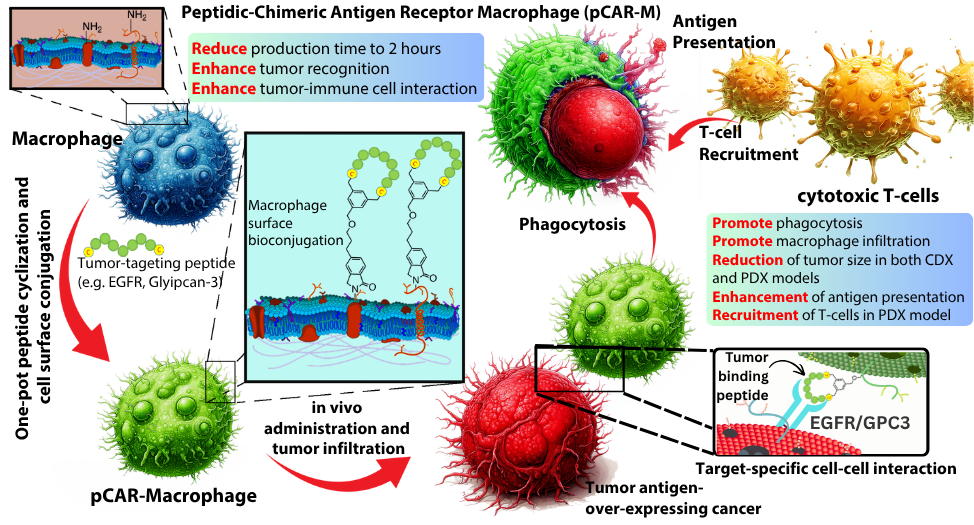
Peptide-linked CAR-Macrophage therapeutics
Phagocytex is building a proprietary pCAR-M platform designed to overcome the solid-tumor infiltration barrier and expand the reach of precision cell therapy.
Platform
The company’s patented peptide linker system is being developed to accelerate candidate design, reduce manufacturing complexity, and support scalable biopharma partnerships.
Platform architecture intended to engineer macrophages for patient-relevant tumor targets on compressed timelines.
Macrophage biology is suited to infiltrating tissue environments where conventional CAR-T approaches can face physical and immunologic barriers.
The pCAR-M system is positioned as a therapeutic platform for biopharma collaborators developing next-wave precision cancer programs.
Science
Leveraging AI and bioinformatics to identify novel tumor markers and discover new ways to target them with precision.
Apply robust chemistry to construct peptide-linked CAR-macrophage in only 2 hours.
Use macrophage infiltration and phagocytic function as a foundation for solid-tumor engagement.
Concept study
In a team-provided conceptual study, native macrophages were converted into peptidic CAR-like macrophages by installing an EGFR-targeting cyclic peptide directly on cell-surface proteins. The approach is designed to avoid viral transduction, permanent genome editing, and prolonged ex vivo expansion.
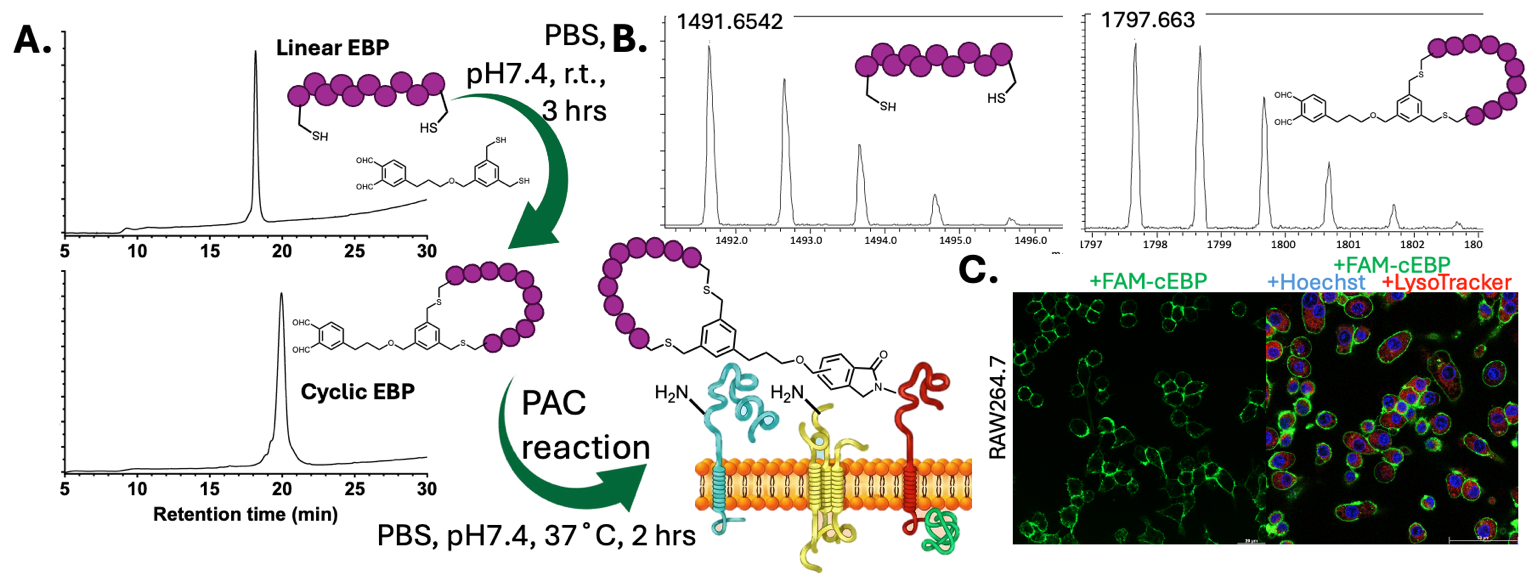
A DBMB-OPA bifunctional linker supports peptide cyclization and covalent macrophage-surface conjugation under mild conditions.
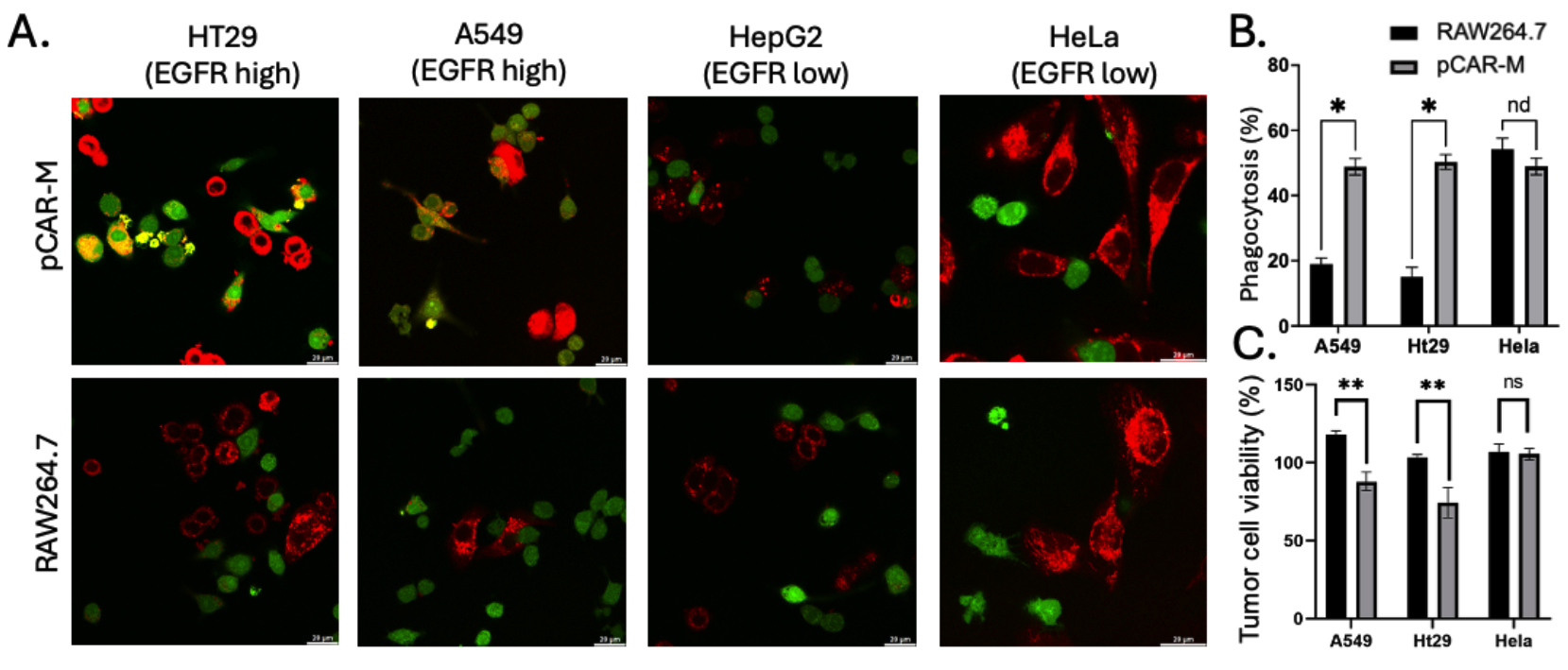
pCAR-M cells showed higher phagocytic activity and reduced tumor-cell viability in EGFR-overexpressing A549 and HT29 models versus unmodified macrophages.
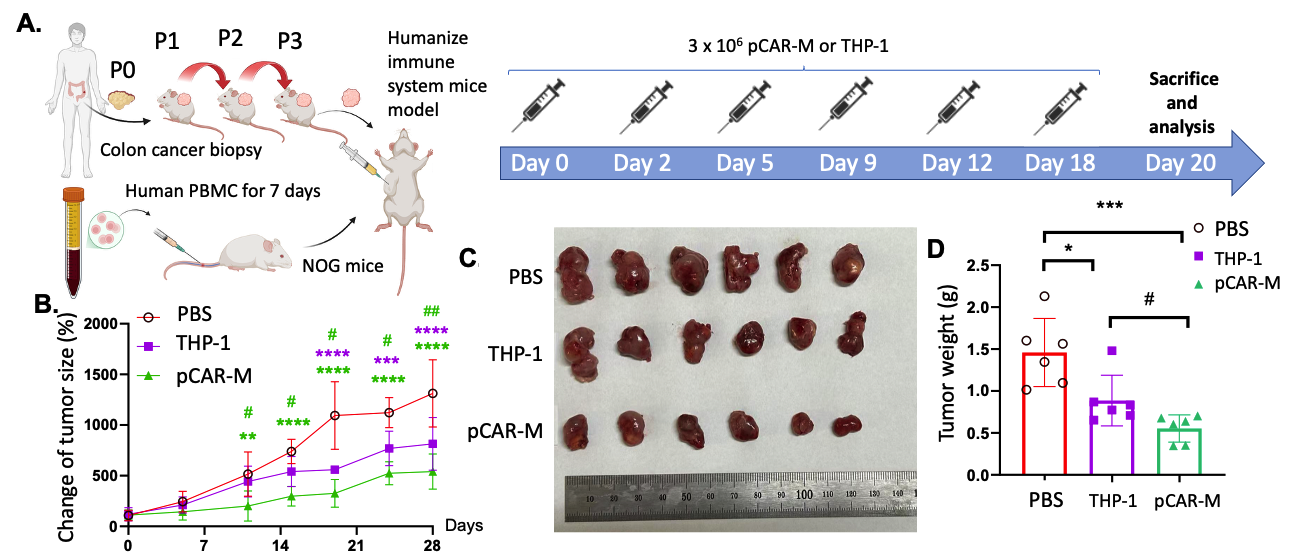
In xenograft and humanized patient-derived tumor models, pCAR-M treatment was associated with tumor growth inhibition and immune-context changes versus control groups.
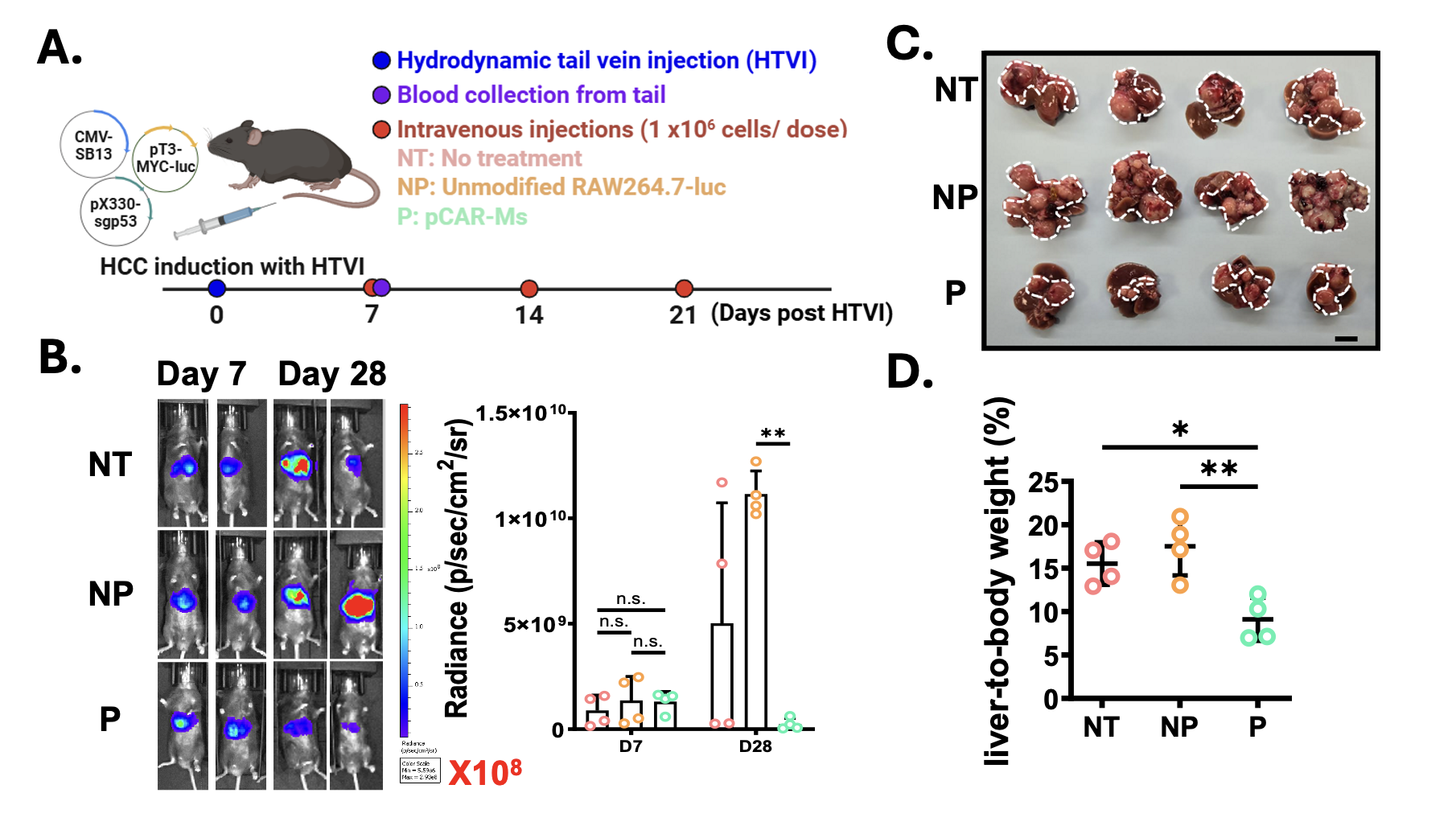
In a hydrodynamic tail-vein injection hepatocellular carcinoma model, mice received no treatment (NT), unmodified RAW264.7-luc macrophages (NP), or pCAR-M treatment (P). Bioluminescence imaging, excised liver tumor photographs, and liver-to-body-weight analysis show lower tumor-associated signal and reduced liver tumor burden in the pCAR-M group by day 28.
News
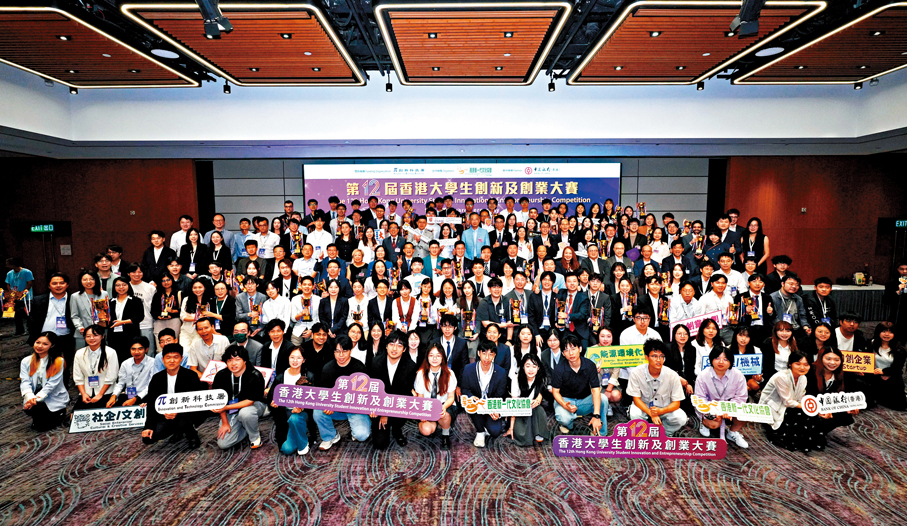
Read the latest Phagocytex milestones as the team shares research progress, competition achievements, start-up recognition, and healthcare innovation activities.
Team
Professor, Department of Applied Biology and Chemical Technology, The Hong Kong Polytechnic University
Assistant Professor, Department of Applied Biology and Chemical Technology, The Hong Kong Polytechnic University
Postdoctoral researcher, Department of Applied Biology and Chemical Technology, The Hong Kong Polytechnic University
PhD researcher, Department of Applied Biology and Chemical Technology, The Hong Kong Polytechnic University
Pipeline
Phagocytex is progressing lead programs across glypican-3, EGFR, and an undisclosed solid-tumor target, with current work focused on candidate validation before IND-enabling development.
Program positions are based on team-provided current progress and are intended for partnership communication.
Partnerships
Phagocytex welcomes conversations with biopharma partners, investors, and translational collaborators exploring macrophage engineering, solid-tumor targeting, and platform development.
Share your program area, target biology, investment interest, or collaboration idea.
View PolyU company profile